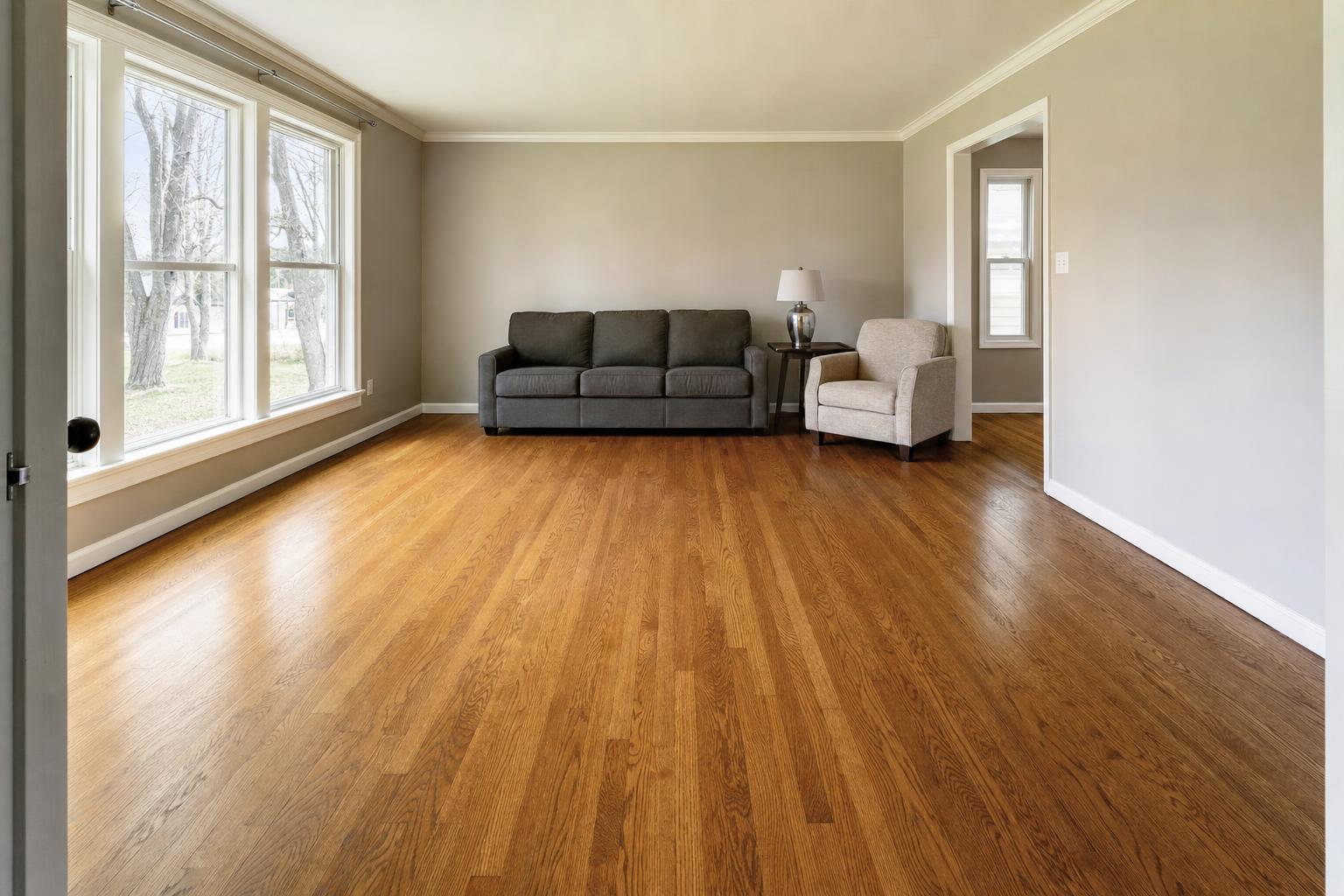
No two screens are calibrated the same, and none of them are the light in your living room
at four in the afternoon in November. These photographs are a good guide and they are not a
guarantee. When you are close to deciding, we sand a small area of your actual floor and put
several stains on it, and you stand over it in your own light. That part is free, and it is the
only way anyone should choose a floor color.
DuraSeal is our default
DuraSeal and Minwax are the same house, both Sherwin-Williams, and most colors cross
between the two lines. Minwax is the consumer grade version and a few colors live only
there. If you found a color on a Minwax chip, we can almost always match it in DuraSeal.
Red oak, which matters
Every board here is red oak. The same stain on white oak reads cooler and greyer, on maple
it goes blotchy without a conditioner, and on pine it barely behaves at all.
Oil stain, waterborne finish
The stain is oil based. The finish over it is usually waterborne, because it dries fast
and you are back on your floor sooner. We use an oil finish where the look or the wood calls
for it, or where you ask: it takes longer and means more trips to the house, and we charge
the same either way.
Width is a decision, not a preference
Boards 5 inches and wider are often made as engineered rather than solid, for the
directional stability a wide solid board does not have. Engineered also comes in thicknesses
other than the traditional three quarter inch, which can be an advantage, or a problem where
a nosing or an adjoining floor already sits at a set height. That is worked out on site.